
What all the great polymaths had in common
Plus: The joys of Homesense and national pride

Hello,
Welcome to March. How are you? I finally went to my first gig of the year last weekend – a divine, sister folk duo called Charm of Finches. Utterly delightful.
The phrase “The only constant in life is change” is often attributed to Greek philosopher Heraclitis. In 2026, that absolutely feels true.
That said, some things don’t vary quite as much. If you’re really struggling, immerse yourself in those activities that ground you. Walking in nature. Solving puzzles. Going for a run. The stuff that isn’t threatened in the same way.
Oh, and the fact that I send one of these emails out every two weeks. 😉
Enjoy and see you in a fortnight.
Something big is happening
OK, I’m going to get my apology in upfront about sharing an AI-related article first. BUT (and it’s a big one) this one really struck home. The last line sums things up perfectly.
We’re past the point where this is an interesting dinner conversation about the future. The future is already here. It just hasn’t knocked on your door yet.
The secret life of a waitress: 9 nightmare diners
I read this piece with growing incredulity. Some of the things people think are acceptable when going out for food are genuinely shocking. As the widely-shared quote goes: “a person who is nice to you but rude to the waiter is not a nice person”.
BOOK OF THE FORTNIGHT
The Names by Florence Knapp
Buy from: Amazon | UK Bookshop *

This is a brilliant book. It’s the story of three names and three versions of a life.
There are echoes of Life After Life, although this is very different. A clever premise and superbly executed. It will stay with you afterwards – and will likely make you cry, too.
It comes out in paperback at the end of March. Definitely worth pre-ordering.
Fancy something else? My fiction bookshelf | My non-fiction bookshelf
What all the great polymaths had in common – and it wasn’t talent
People in the public eye who do more than one thing is very much the current ‘thing’. Musicians who act. Politicians who write thrillers. Sports stars who become entrepreneurs. It’s treated as a modern phenomenon, a product of personal branding and social media.
But here’s what I keep coming back to: none of this is new, and the reason it isn’t new is also the reason it exists at all – curiosity.
I was listening to an episode of Human Intelligence about Leonardo da Vinci recently. Here was a man in the early 16th century who excelled in art and architecture, but who also conducted scientific research, created military technology, studied the circulation of blood, performed dissection... the list appears endless. What strikes me isn’t the sheer breadth of his achievements – it’s that he almost certainly didn’t set out to achieve any of them. He followed questions. One led to another, until he found himself somewhere nobody had been before.
Benjamin Franklin is another case: writer, scientist, inventor, statesman, diplomat, printer — and one of the founding fathers of the United States, almost as an afterthought. And back in the 12th century, Hildegard of Bingen – a German Benedictine abbess — was simultaneously a composer, philosopher, mystic, visionary and medical writer. A life built across disciplines that would confuse any modern job description.
Modern multi-hyphenates look positively pitiful by comparison. But that’s not really the point. In every case, curiosity was the engine. These people weren’t satisfied with staying in their lane – not because they were ambitious in the conventional sense, but because they couldn’t stop asking why.
I’ve long been an advocate of curiosity. Going down rabbit holes. Asking ‘why’, rather than just accepting something at face value. As Sahil Bloom says:
If curiosity were a pill, all the world’s pharmaceutical companies would clamor to sell it as a super-drug
When you follow a question far enough, you often find yourself somewhere you never planned to go – and that somewhere turns out to be exactly where you needed to be.
You don’t have to be Leonardo d.V. But refusing to ask questions outside your immediate expertise is a choice. Just not a very interesting one.
Bad lunch: the life of a ship’s cook
This is a sort of companion piece to the ‘secret life of a waitress’ story further up. Yet again, it demonstrates that money does so often make people rather unpleasant.
Pair with: How To Feed A Dictator (fascinating book)
Have historians found a part of the Underground Railroad?
Staff at the Merchant’s House Museum in New York unearthed a narrow tunnel, hidden below a piece of built-in furniture on the second floor – the tunnel is likely 200 years old.
Never heard of the Underground Railroad? You clearly never read Colson Whitehead’s Pulitzer Prize-winning novel from 2017.
Are ‘reading targets’ good or bad?
I admit I’ve set myself an annual target since 2011. It’s been as ‘low’ as 35 and as high as a book a week. I don’t think any less of myself if I don’t reach the desired goal. Unless it’s part of your ‘job’, I find it weird that someone can fit in 100+ books in a year.
The algebra of resistance
Scott Galloway’s idea at the heart of this piece is very neat: ‘unsubscribe and resist’. Essentially, getting people to step away from Big Tech. Whether that’s not getting their emails, removing their apps from phone, or even deleting accounts. If you think about it, it’s the main way you can make a small, but financial impact.
Does that use a lot of energy?
Hannah Ritchie is always required reading [subscribe to her Substack!] and this tool that allows you to see your imprint on the world, through simple everyday things like using an air fryer, driving your car or using ChatGPT is worth playing with.
What makes people proud of their country?
This is a lovely piece of research – people in 25 countries share what makes them proud, in their own words. Mind you, the answers from the UK are a bit depressing 😕
The joys of Homesense
This had us in absolute hysterics at home. We’ve often wandered around and marvelled at some of the things on offer in Homesense. This reel encapsulates it perfectly!

What does the audience really want?
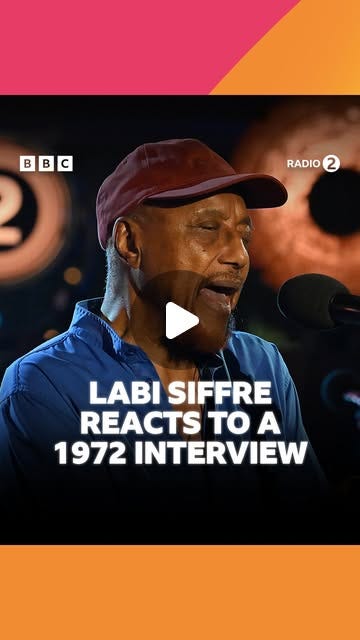
I love this clip of Labi Siffre reacting to his own answer to a question from 50+ years ago. What he says now is so spot on – and also why copycat culture is so frustrating.
THE FINAL RANDOM LINKS
Thanks for reading/listening/watching!
Rob
THANKS FOR READING
*As always my book recommendation links usually go to one of two places:
1) Bookshop.org (an online bookshop with a mission to financially support local, independent bookshops – it's an affiliate link, so I earn a tiny amount at no extra cost to you)
2) I also include an Amazon affiliate link, though, as I know lots of people still read via Kindle, even though they're taking over the world!
I'm always grateful when people send on recommendations for inclusion in here. If you ever see something you think I'd love to read, please let me know, or comment below. The internet is a big space and I only search a small part of it...
A FINAL, FINAL WORD
I produce this newsletter for free and don’t expect any money. That said, content creation takes time so if you fancy chipping in, then do so.
> If you want to give a small one-off contribution, then buy me a Ko-fi.
Or you can subscribe for a year!